
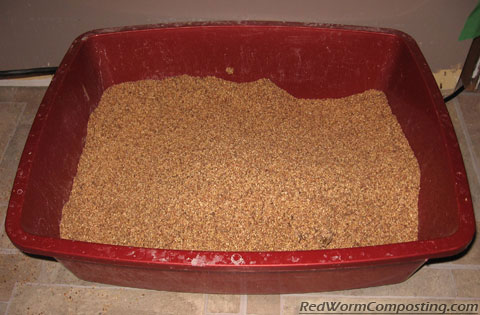
A recent comment (from a vet, no less) on my ‘Cat Litter Vermicomposting‘ post reminded me that I wanted to provide a quick update on that front.
Unfortunately, winter seems to have swept in quite quickly here, so I’m not sure that I’ll be able to construct my outdoor pet waste composter as planned (unless the snow melts at some point). Have no fear though – I still plan to try vermicomposting the litter indoors (in a designated test bin). It should actually end up being a more valuable learning experience since it will be easier to see what’s happening and to augment the process as needed.
I must say, I’ve been pretty impressed with the Green Cat Litter thus far. While it is much lighter than the clumping clay stuff (a definite bonus), it has a similar appearance and texture. As our vet friend pointed out, it can take a while for cats to get used to litter with a difference texture etc from what they are used to (and were introduced to as a kitten). I’ve heard that some of the other biodegradable cat litters are not well-received by cats for this very reason.
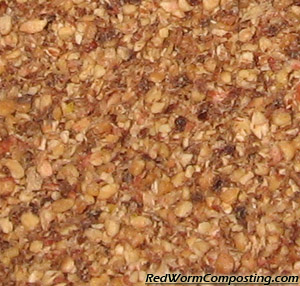
This brand of litter (PC Green Clumping Cat Litter) is made of ground up corn cobs and, as mentioned, is actually quite similar to regular clumping litter. Similar ‘look and feel’ aside, I thought for sure that it would end up stinking a lot more than the normal litter. Interestingly enough, it actually seems to be much better in that department – although we’ll have to wait and see how it performs over time.
Just to be on the safe side, I decided to use the new litter in only one of the two litter boxes. Once the old material in the other box needs to be completely dumped I will likely switch over completely to the biodegradable litter (since they seem to adjusting to it quite quickly). Once they are completely used to the new stuff, I want to try adding other biodegradable materials, like shredded cardboard etc. This will not only help to save some money, but it will also provide me with a material that’s better suited for a worm bin (I suspect that the corn cob granules will take quite awhile to break down).
Anyway, I will definitely let everyone know once I set up my test bin!
**For Even More Worm Fun, Sign Up for the RWC E-mail List!**
I am so looking forward to reading how that turned out! Since it was written in 2008 & it is now 2010, seems like there would be an update by now.
This article is older but i still find it so helpful…as an owner of 2 cats i also wanted to find environmentally friendly cat litter as so much of it goes out into landfills. I started using corn corb litter but have now switched to walnut litter. I started dumping the litter outside in our flower beds for over winter composting. Now in March i am surprise tonsee how well the tulips are popping out of the ground and how much mushrooms (not edible) are growing there. I thought the high ammonia content would take at least 6 months to be completely safe for plants but it has been onlg 3 months and with the all the rain we got this last winter in vancouver i guess the ammonia have all been ‘washed away’ or nicely diluted. It rained everyday for 2 weeks at a time. Not sure if there are any worms underneath as i did not dig down to look but the stuff that are growing out of there amazes me. I had tulip bulbs that did not even bother shooting up last few years but this year they all shot up. Also i was hoping the kitty litter would help with my dense clay buils up in the soil. So glad to have found your blog as it reassures me that maybe I am on the right track. 🙂